
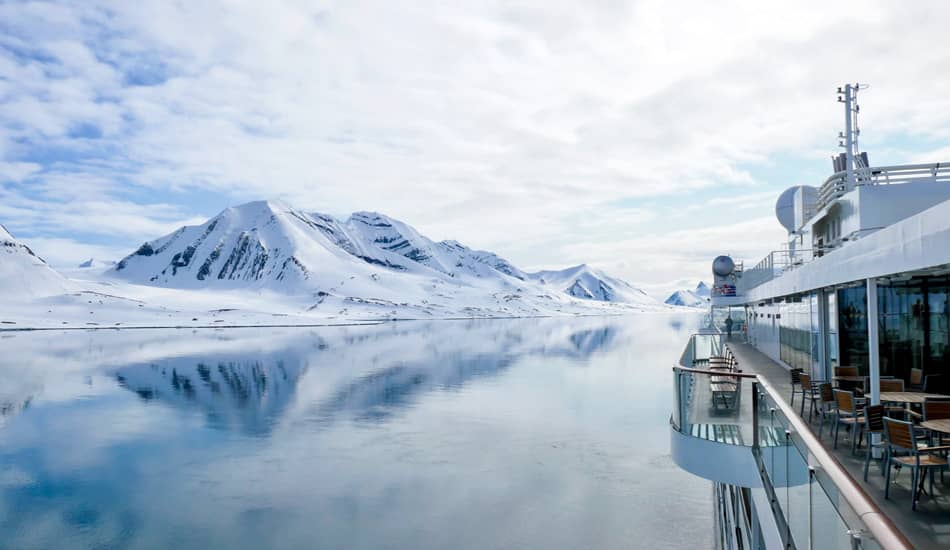
When we boarded the plane in Oslo, it was a summery Nordic morning, the kind that left me feeling uncomfortable in the jeans and sweatshirt I decided to wear in the fog of sleepiness. I hoped the airport might be chillier than it was, but there was no relief to be found. There was no relief on the plane, either, where I pushed up my sleeves and wished I had been awake enough to think about wearing a t-shirt for the first part of the journey. Three hours later, the same sun that warmed Oslo didn’t do a thing to warm me on the tarmac in arctic Svalbard. Forget the t-shirt; I wished I had bothered to pack a coat.
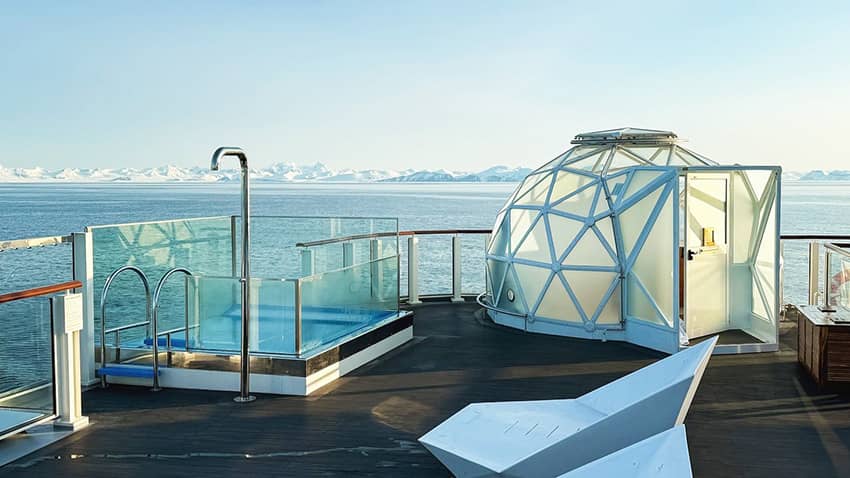
Instead of a more classic beach trip, this year’s summer vacation took us to one of the most remote parts of the planet for a full week of fun on land and on the water. Like previous expeditions, we had many hopes but few expectations for the time we would spend in Svalbard. Although the islands and the oceans that surround them are brimming with wildlife—the main draw for most visitors—there are no guarantees of seeing anything more than birds above and ice below. That’s what makes a trip to Svalbard so special: nothing is promised, but everything is possible.
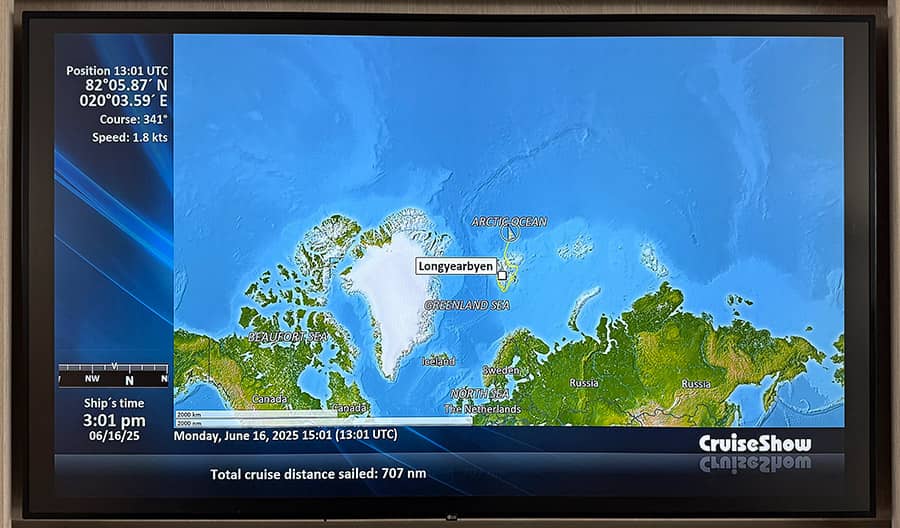
Longyearbyen, and the Start of the Journey
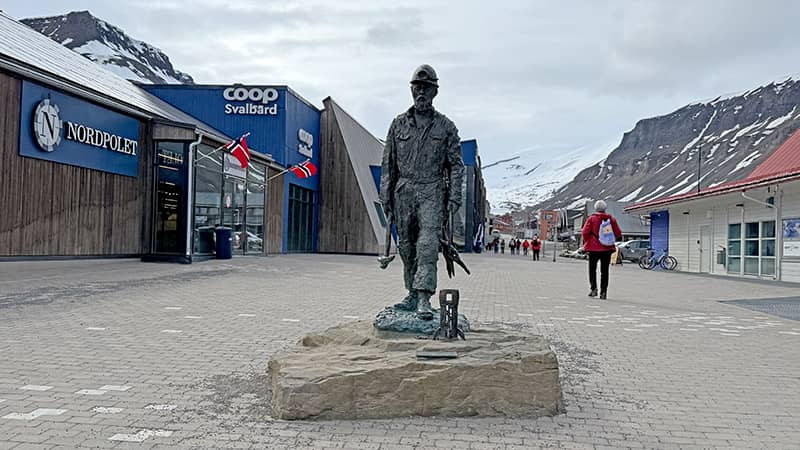
The Norwegian archipelago Svalbard is home to just 3,000 people, a number that swells during the summer months when close to 100,000 tourists arrive by plane and ship to experience one of the planet’s most remote locations. Many of them live in Longyearbyen.
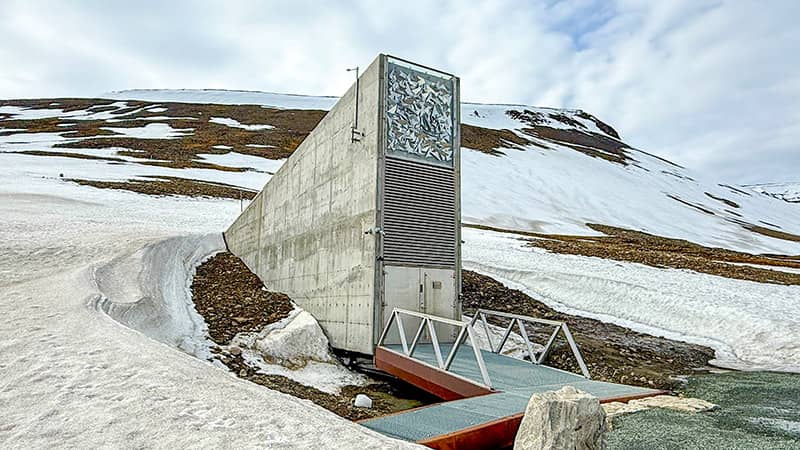
While we were excited for a glimpse into what daily life is like for people who don’t mind extreme daylight, extreme darkness, and year-round cold temperatures, our visit began away from the main town with a trip to one of its most unique buildings: the Svalbard Global Seed Vault. Stemming from concerns that key global crops may one day go extinct due to climate change, accidents, or other unforeseen circumstances, almost 1.4 million seeds from around the world are stored in a climate-controlled facility. Svalbard was considered an ideal place to house the seed bank because it is largely protected from seismic activity, and the permafrost that covers the islands is a great added layer of insulation. While most of us had heard of the seed bank, standing in front of it was surreal (and felt just a bit like a scene from a doomsday movie). It was also the closet we could get; as the small sign out front reminded us, there is no public access to the seed vault.
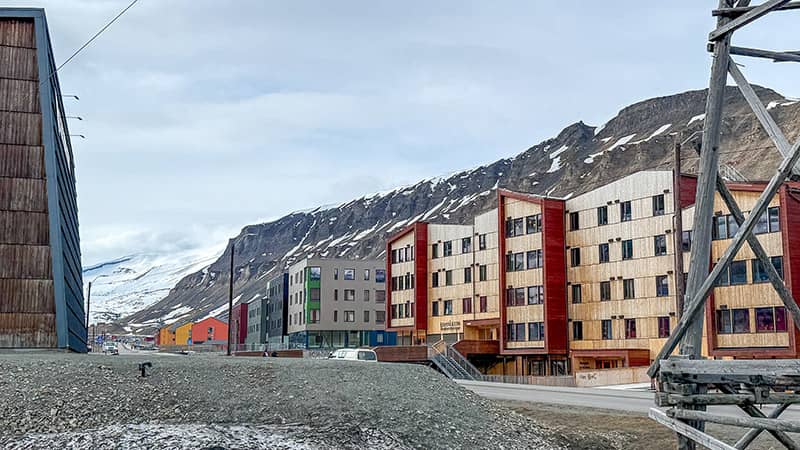
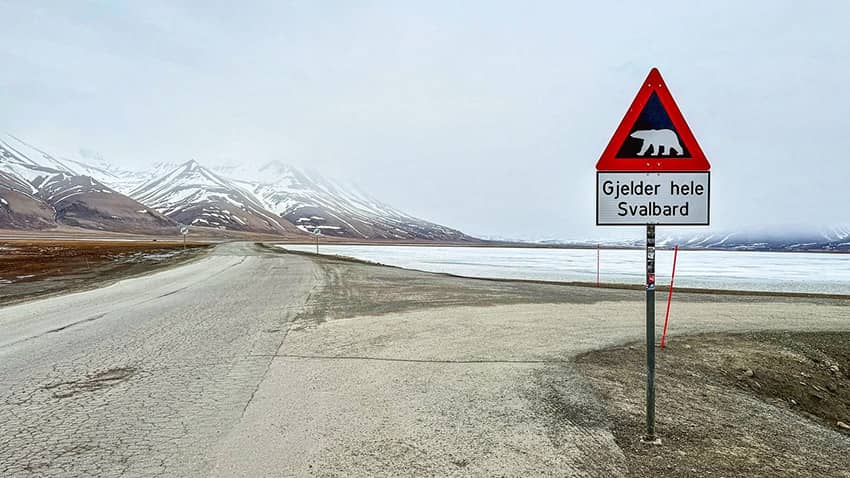
As for wildlife, although most of the 120 travelers joining us on our expedition were as excited to see animals as we were, no one was disappointed by the lack of polar bears in Longyearbyen during out visit. Still, there was no shortage of animals to see during the few hours we spent there. We warmed up with coffee at Café Huskies, where we received an equally warm welcome from a few sleepy pups who were more than satisfied to relax at our feet during our snack break. On the walk from the café further into town, we saw a couple of reindeer foraging along the side of the road. Before our time on the island ended, we spent some time at Svalbard Husky to learn about the art of sledding powered by a team of dogs. While we didn’t have time for a ride, it was clear the dogs were more disappointed than we were; when our host lifted a harness for us to see, the dogs saw a visual cue that led them to think it was time to run. It was very clear the dogs are passionate about their job!
More Information: TripAdvisor.com/Cafe_Huskies
Svalbard by Land
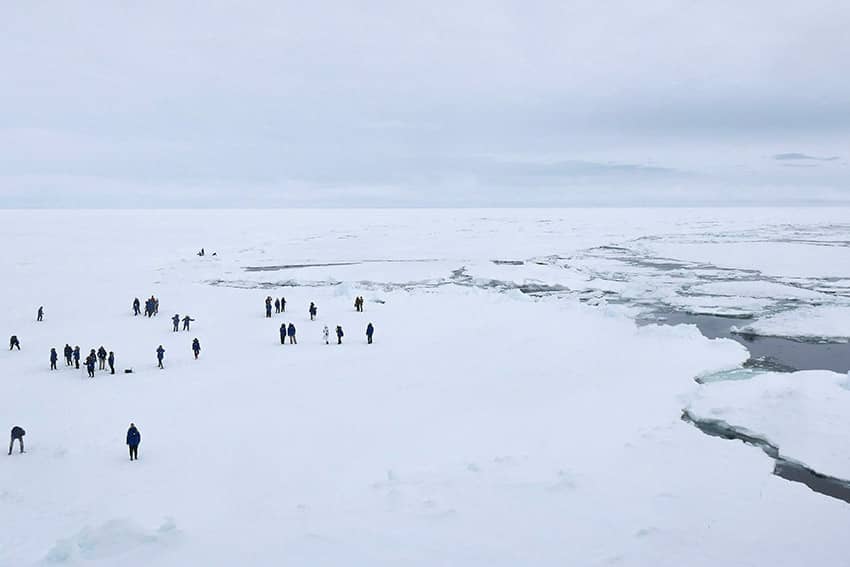
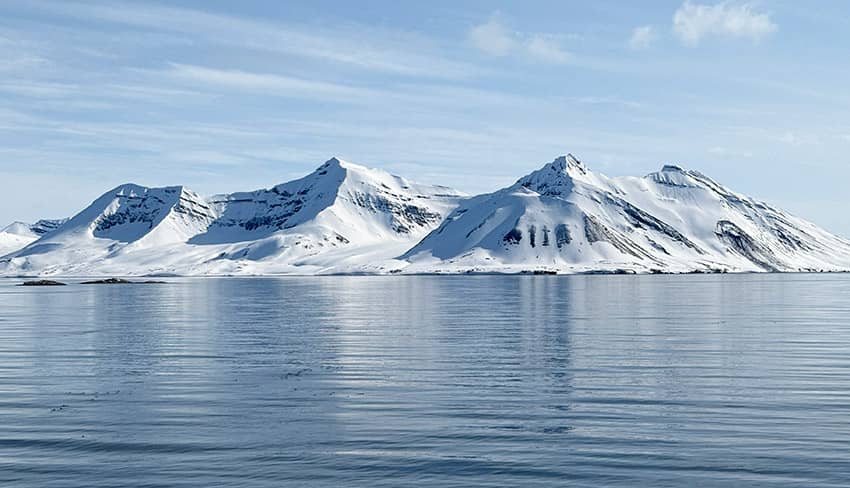
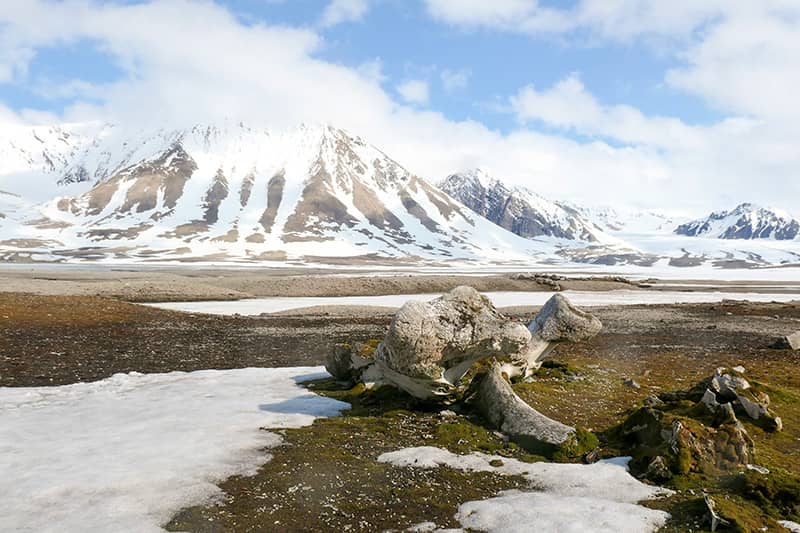
Unlike most places one might visit, where attractions like cultural landmarks or restaurants might be a natural draw, Svalbard offers nothing but vast, snow-covered openness. There are no plaques to read, monuments to admire, or evidence of any previous visitors once Longyearbyen has disappeared into the horizon. If it sounds like an ever-so-slightly boring way to spend hard-earned vacation time, it’s not. In fact, we were amazed by how quickly time passed as we explored Svalbard by land.
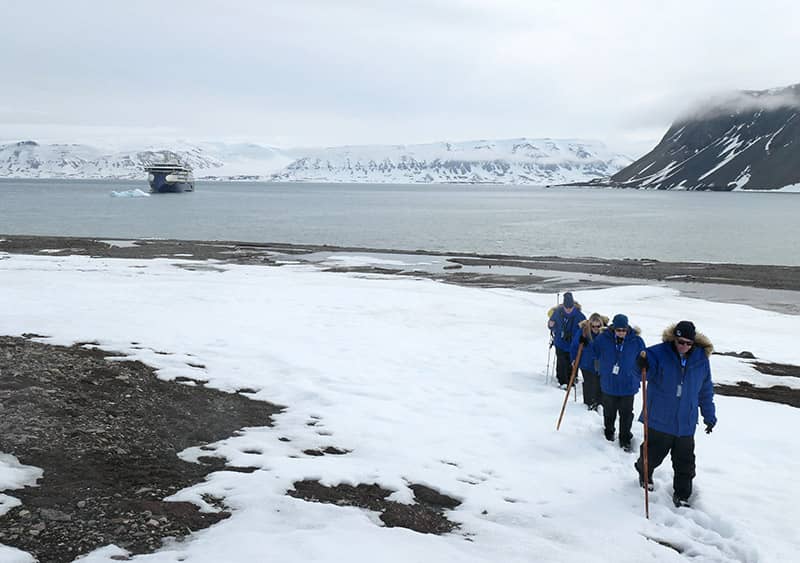
Like each of the National Geographic-Lindblad Expeditions trips we have taken before, the team regularly presented us with a range of options for how we could spend time exploring on land. Most stops allowed us to select from three choices: a longer, fast-paced hike designed to cover plenty of ground in search of incredible viewpoints; medium-length hikes with pause points to take in the sights and sounds around us; and shorter wanders close to the zodiac landing sites for those more focused on experience rather than exercise. We prioritized the shorter and medium options, which gave us great access to naturalists who narrated our exploration and added depth and color to the largely gray and white landscapes we saw.
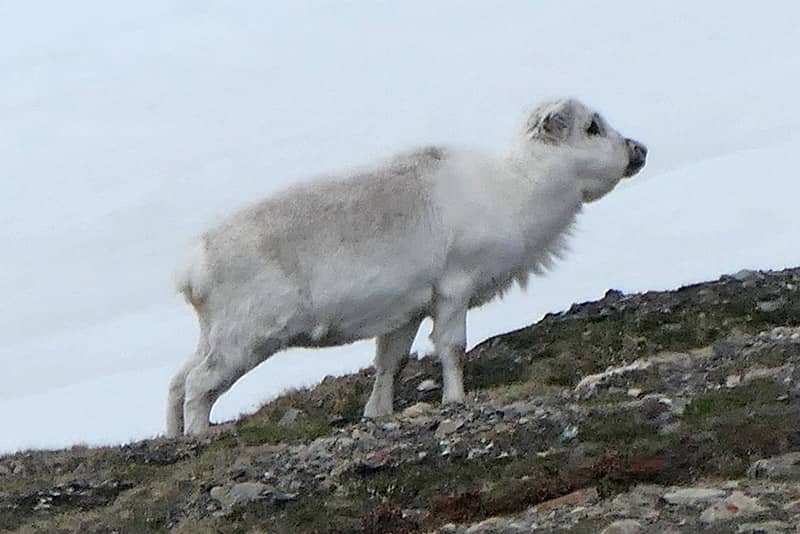
I expected plenty of snow and ice, but I was surprised to see how alive the land was. On one hike, we paused a dozen times to admire flowers like the purple saxifrage, the first to bloom during Svalbard’s springtime. The bright clusters were scattered along our path, and I delighted in dodging them to avoid trampling them. More than just unexpected flora that seemed to have no business blooming where it was planted, plants like purple saxifrage are an important food source for animals like reindeer, which we also encountered on our walk. While we didn’t get close to them, the reindeer weren’t especially skittish; we learned that, as long as they had the higher ground and felt they could run from us if they felt like it, they would likely stay calm and continue meandering and foraging. We watched them for quite a while as they grazed, never once flinching as if they understood we had no desire to bother them.
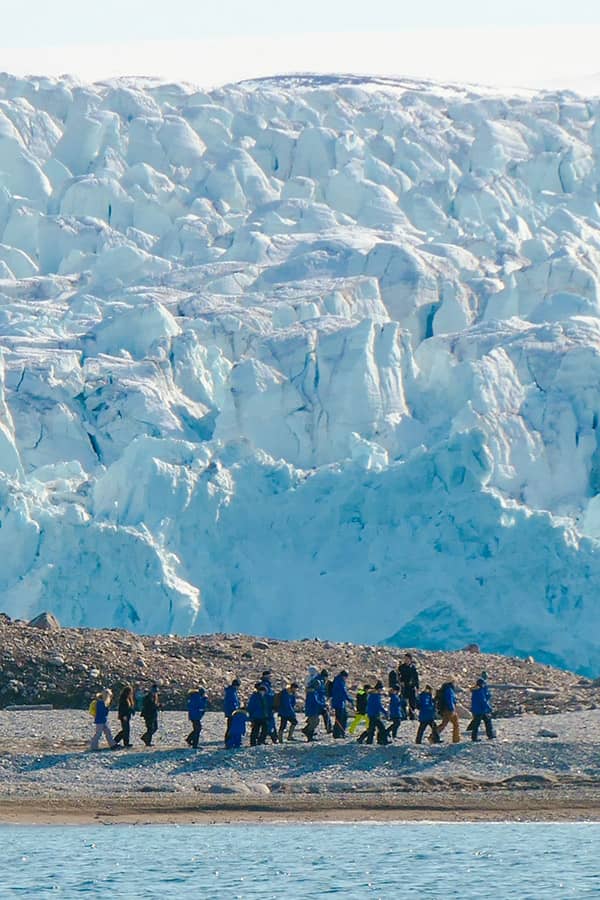
At the end of the hike, our naturalists invited us to sit down for a few minutes, put our cameras away, and soak in the scene around us. I picked a spot overlooking a glacier and spent five minutes listening to the sound of ice melt rushing toward the open water and birds calling to one another in the distance. Although it wasn’t silent, it brought the kind of quiet that encouraged my mind to slow and my body to still. The world tends to be loud and busy, and it’s increasingly harder to avoid the rush of daily life. Our brief pause was an invitation to let everything go—from the exciting thoughts about what else our expedition would offer to the more looming thoughts about work and responsibilities that are so hard to escape. I thought I chose Svalbard for adventure; I was surprised it was a wonderful place to let go and relax.
Svalbard by Water
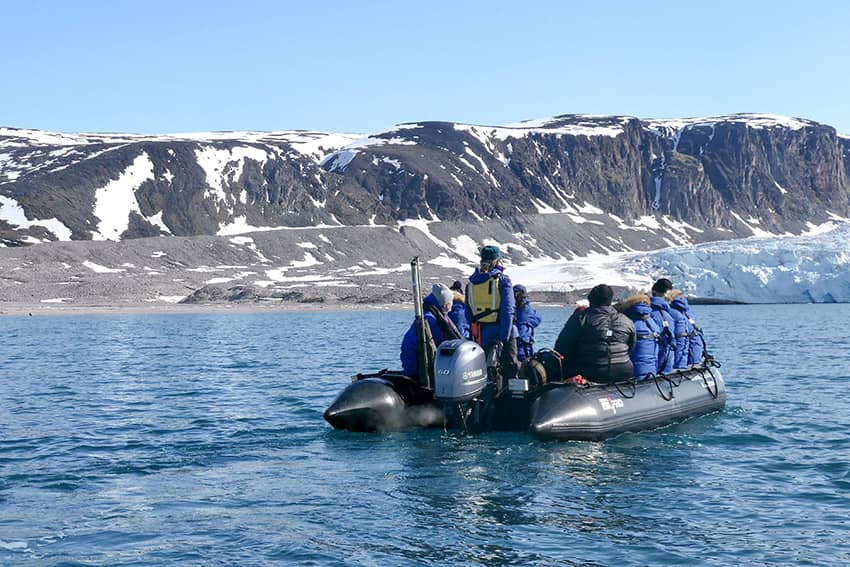
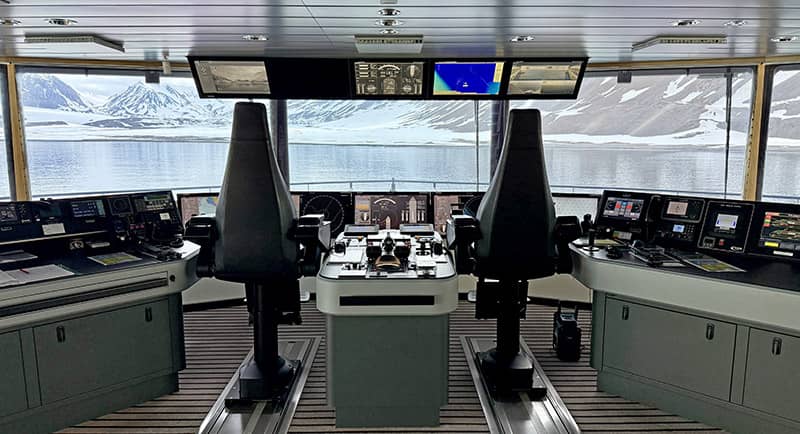
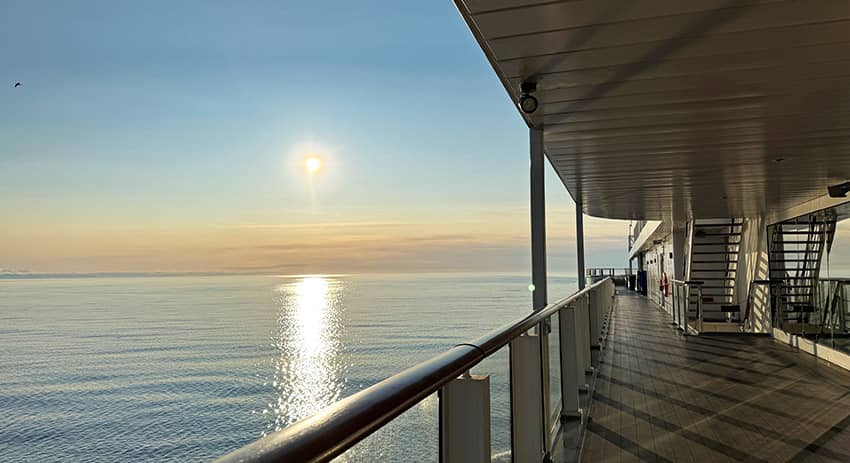
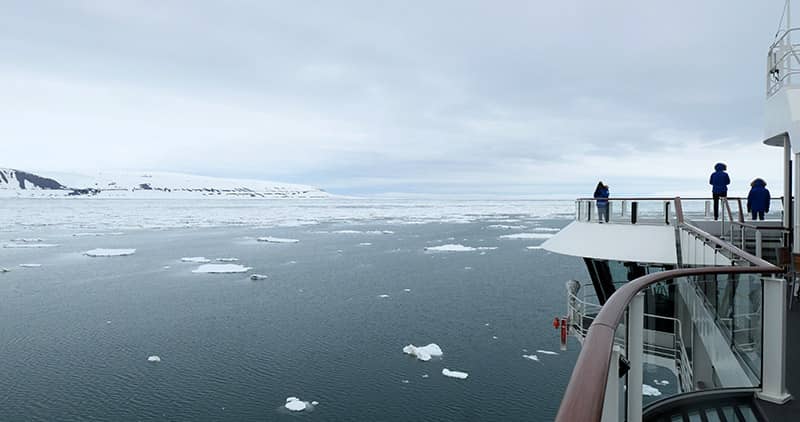
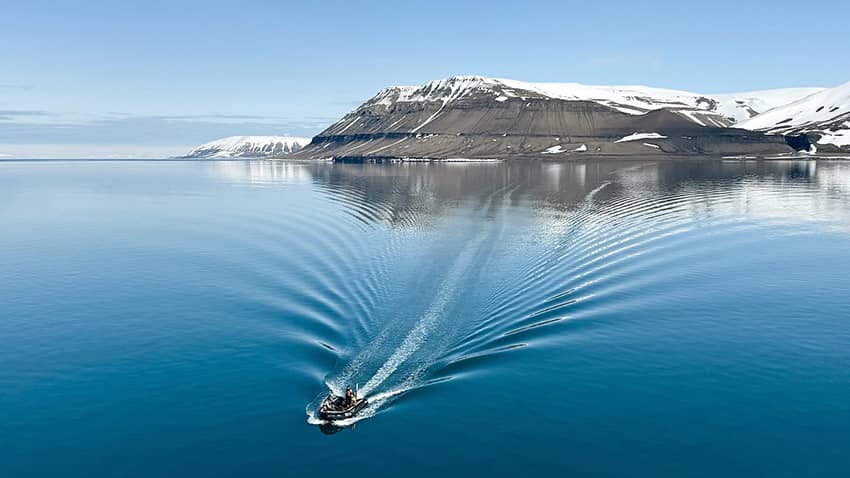
Some of our expedition’s most magical moments came as we explored Svalbard by water. Most of our journey took place on boats, from the large icebreaker that served as our home for the week to the smaller rubber zodiacs that whisked us to and from land and hugged the coastlines for up-close views into the rugged terrain so many animals call home.
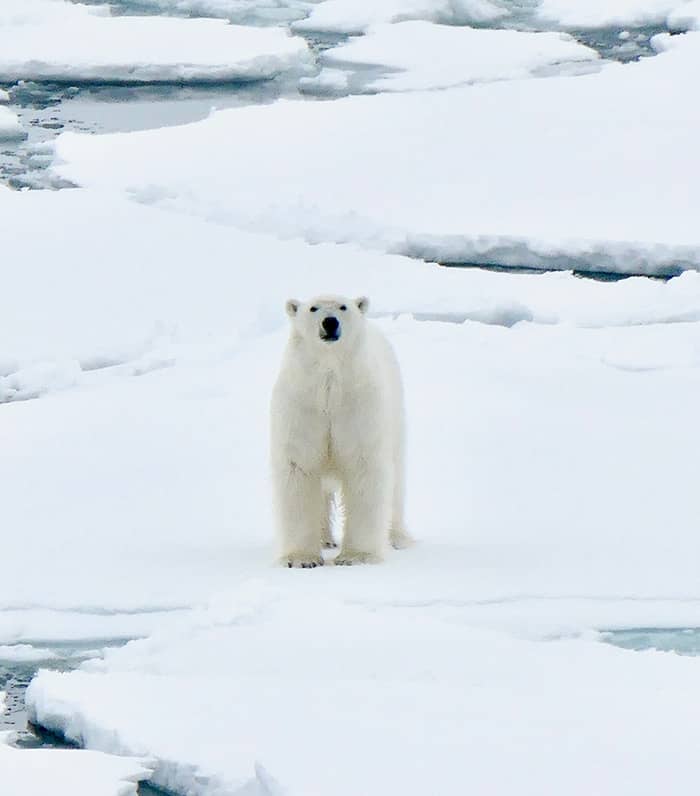
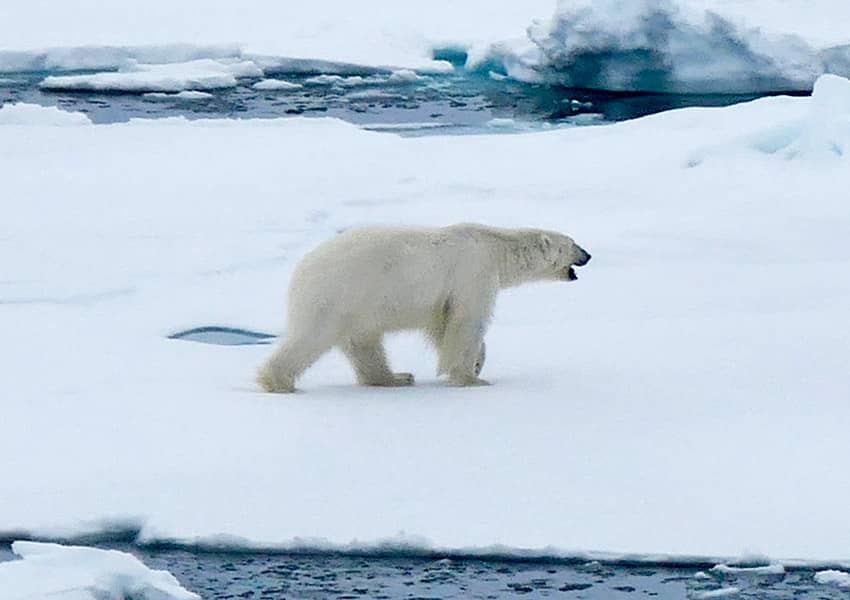
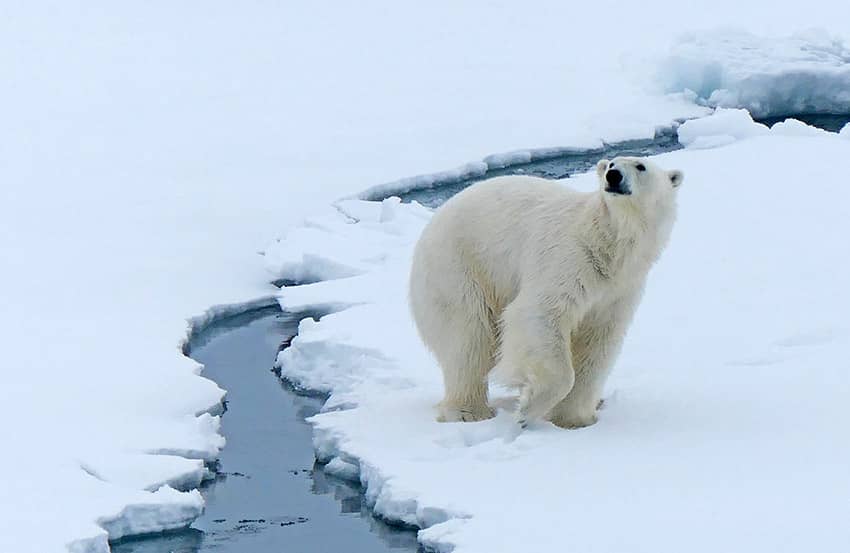
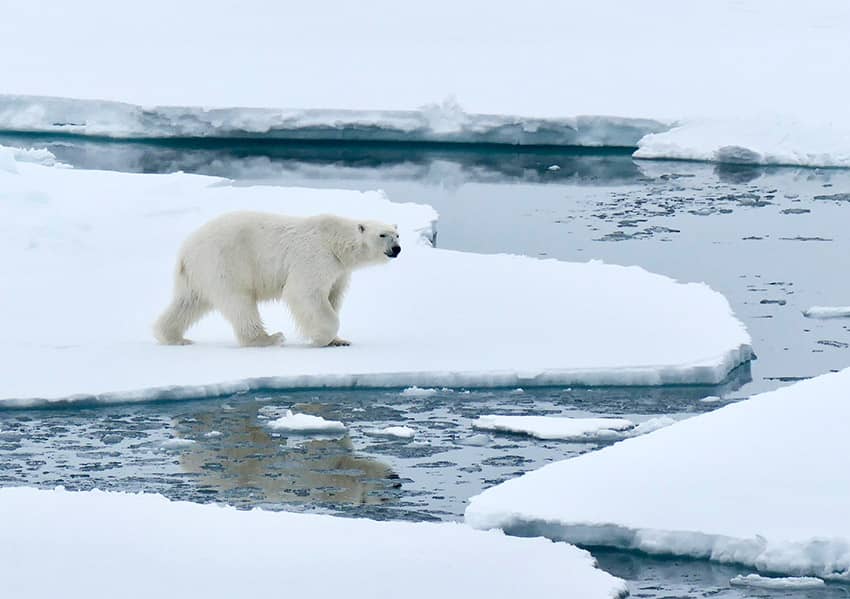 When asked what each of us was most excited to see, almost all of us said polar bears (with the elusive narwhal a very close second!). While narwhals are notoriously shy and none made their presence known during our voyage, we had much more luck with the polar bear community. Our captain told us there are three different kinds of bears in Svalbard: shy bears that disappear as soon as they see a massive boat sailing their way, disinterested bears that ignore ships and the humans aboard them, and curious bears that actively approach the ship and offer a much closer look at them. We were remarkably lucky one morning when we encountered not one but two curious bears who were more than happy to walk close to our ship, studying us almost as intently as we studied them. Apart from camera shutters, every single traveler fell completely silent as we listened to the sound of ice crunching beneath the bears’ powerful paws and watched them trek across the ice. They put on a bit of a show for us, standing on their back legs and walking close enough and slowly enough that it was easy to take incredible pictures of them. We saw a handful of other bears during our trip, but that single experience was so perfect and complete that I would have been fine without seeing another one for the rest of the trip. Bear sightings are common but never guaranteed, and a morning with a duo of curious bears was rare and magical.
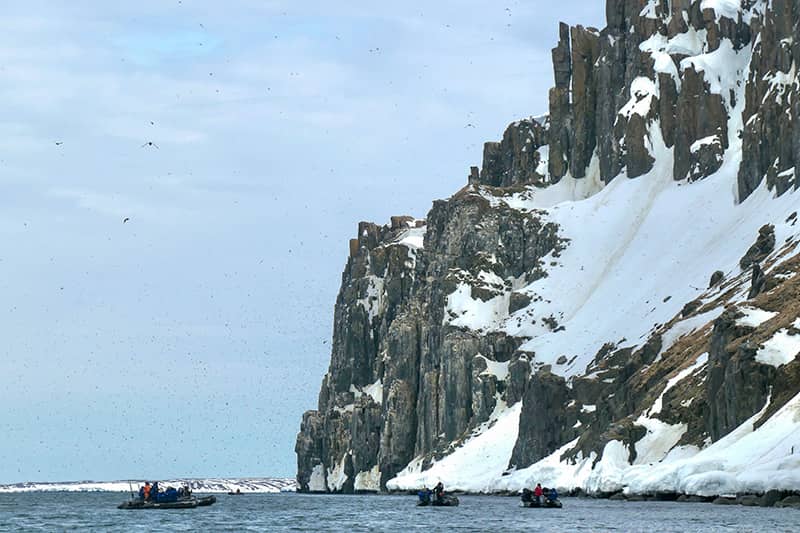
Like anywhere else, Svalbard also has its less desirable areas, and a zodiac tour to a popular bird nesting spot reminded us that even the northernmost areas of the world are not without their drama. More than 200 species of birds call Svalbard home, and we spent 90 minutes birdwatching in Alkefjellet. Home to at least 60,000 breeding pairs of guillemots, we expected to see plenty of flying, diving, and bobbing on the waves. We did; we also saw a shocking amount of simply bad behavior that wasn’t part of any brochure. We saw a handful of cannibal birds consuming the remains of their fallen friends. We watched dozens of fights break out, including one that turned into an epic 10-minute-long showdown in the water. In a way, the outing became one of my favorite experiences of the week; after some peaceful birdwatching experiences in Belize, Galápagos, and Greenland, seeing an episode of Birds Gone Wild was a nice reminder that humans may create a lot of drama, but we certainly didn’t invent it. Comparing notes on the various scandalous behaviors we saw led to some hilarious dinner conversations, but the lesson in how the bird communities live and even thrive in Svalbard was not lost on us.
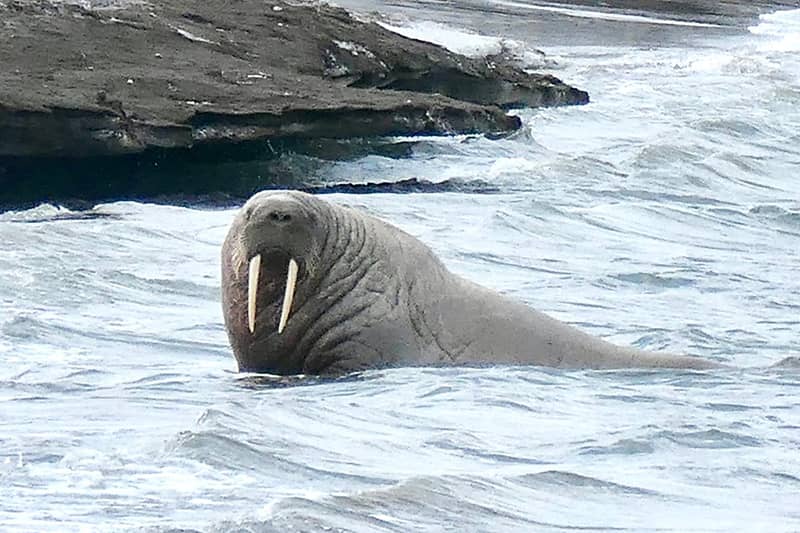
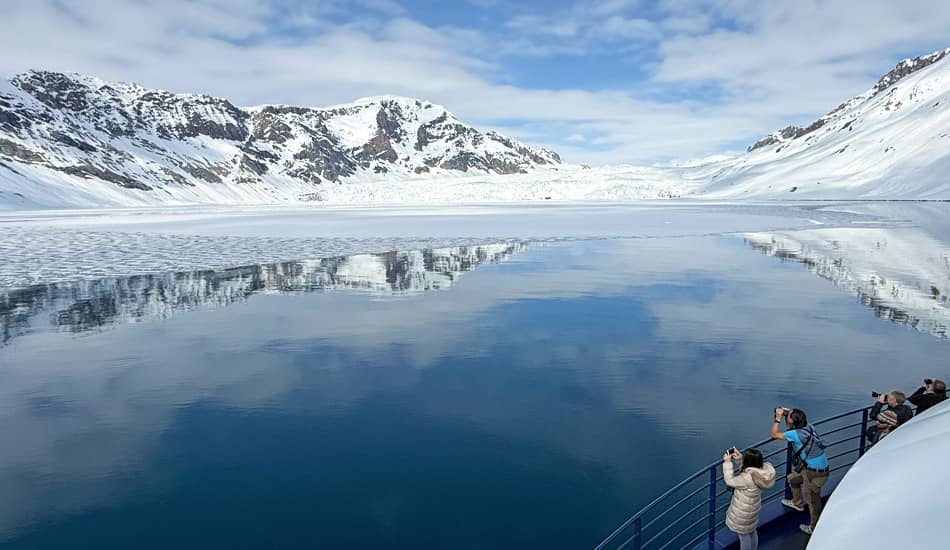
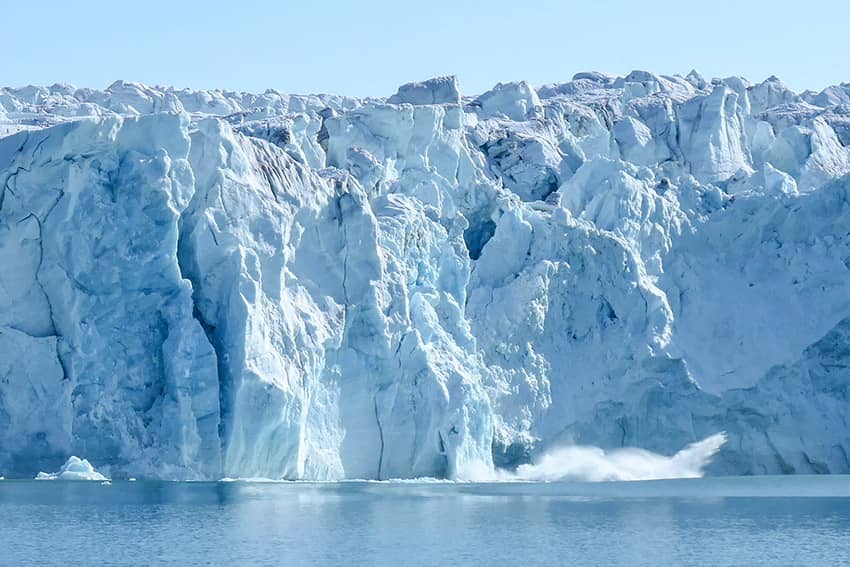
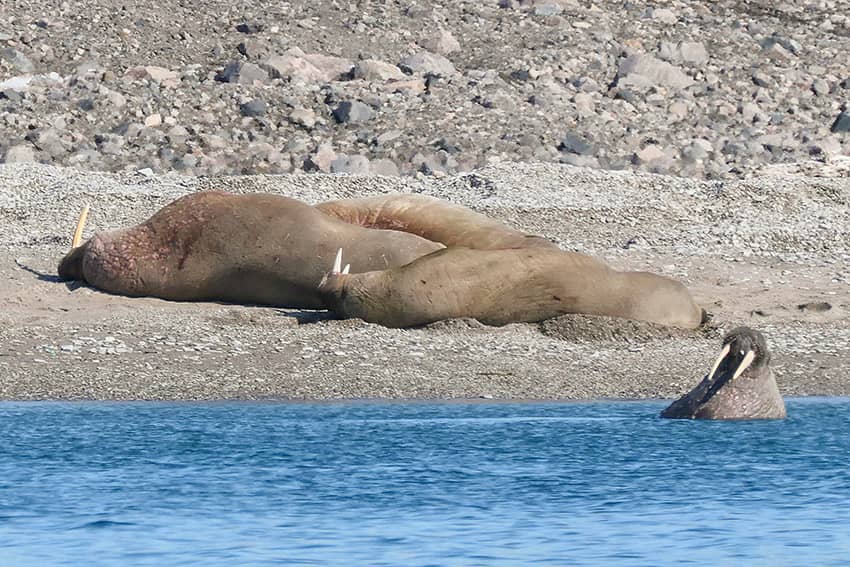
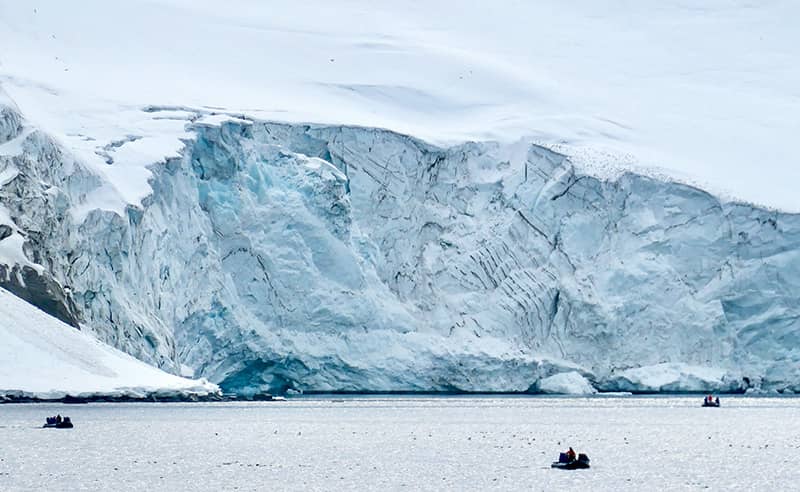
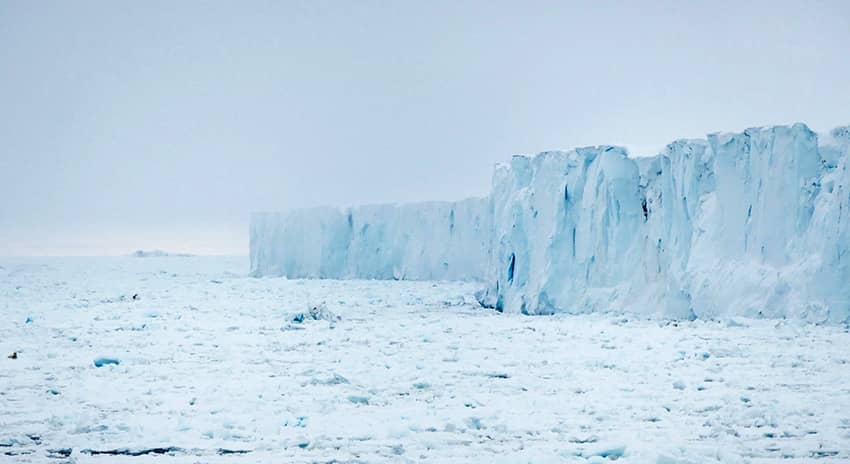
Beyond wildlife, Svalbard’s incredible natural features are more than enough of a reason to visit. Late one night, we watched in total awe as the Bråsvellbreen glacier came into view. Stretching more than 110 miles in length and almost 80 feet in height, it’s part of the Austfonna ice shelf on Nordaustlandet island in Svalbard. As we sailed past it, I saw a handful of walruses resting on the shore, fully unaware they chose such an iconic spot to sleep. Further south, we loved the quiet morning we spent sailing close to Wijdefjorden, Svalbard’s longest fjord and the spot where we saw some spectacular ice calving. The contrast between Bråsvellbreen and Wijdefjorden was especially interesting; one seemed long-lasting and steadfast as it stretched as far as we could see, while the other one actively changed before our eyes. Our planet is dynamic and full of contrasts, many of which we embraced during our expedition.
We enjoyed a brief movie night at sea a few days later, when many of us gathered in the lounge to watch a short film about the the Austfonna ice shelf on Nordaustlandet. It’s available on YouTube and well worth the time investment if you’re curious about this incredible landscape:
Visiting Svalbard on an Expedition
With regular commercial flights available from Oslo during the summer, it’s fairly easy to get to Svalbard if you’re hoping to explore some of the northernmost spots on Earth. The best way to visit, though, is by joining an expedition.
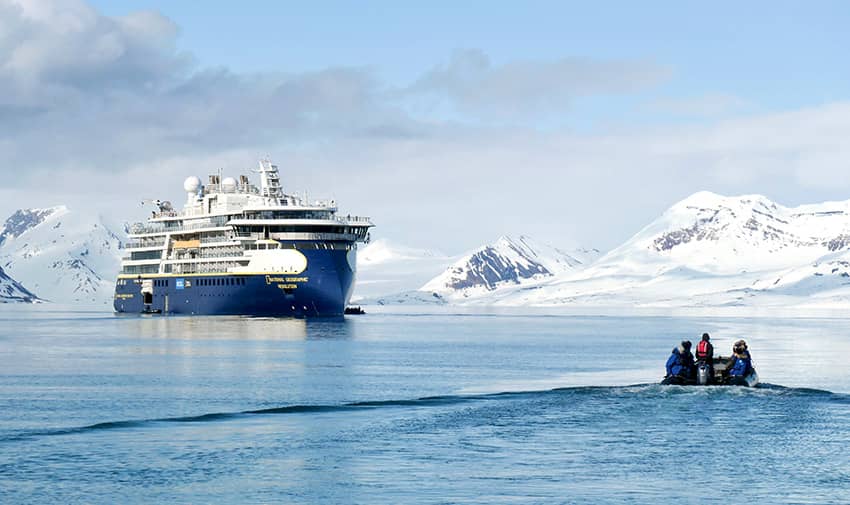
The best part of any expedition is the community you find while you’re there. The world has many different types of travelers, and those who gravitate toward expeditions are some of my favorites. I loved the long conversations that took place around the outdoor firepit, the dinner tables, and the bar as one day melted into another, listening to stories of global exploration from people who love the challenges adventure travel can offer. Trips like this are incredibly special, and they tend to bond those with shared memories in very powerful ways. Sure, it was thrilling to see polar bears and walruses in their natural habitat, but it is just as thrilling to know there are just a handful of other people who share your memory and experience.
More Information: Expeditions.com
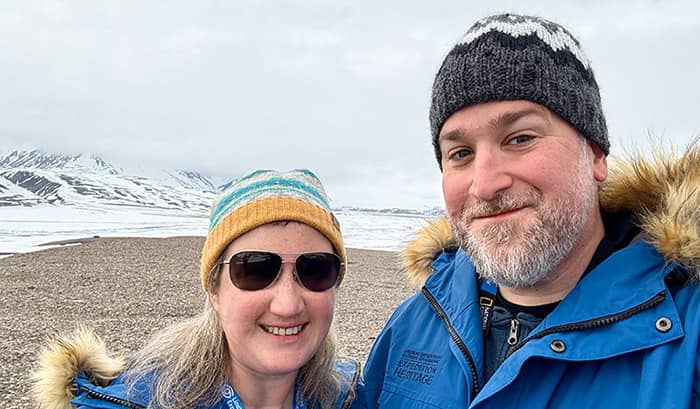 Just two days after disembarking the Resolution in Longyearbyen, my plane touched down in the USA. I pushed the sleeves up on my sweatshirt—this time, one with Svalbard embroidered in large letters—and felt the 90° heat start to wrap around me as if it were the parka I had packed in my luggage. Yet again, I was overdressed for the weather. I looked out the plane window at the sun streaming into the cabin and thought about how that same sun was never quite enough to cut through the chilly weather where I had just been. In Svalbard, the sun was a steady companion, constantly illuminating the landscape and encouraging us to remain present for as long as the trip lasted. It didn’t always give me the warmth I wanted, but it always gave me the light I needed. The same is true for expedition travel; we don’t always know if we will get the trip we want, but we almost always get the trip we need. Svalbard united me with a reignited appreciation for the world around me, the gift of pausing to enjoy it, and connections to some truly wonderful people with whom I shared all of it.
Perhaps I’ll never learn the art of dressing for travel days, but I have certainly learned the value of travel.

Related Posts
Planning a trip to this part of the world? Here are a few more places we’ve written about!


Note: This article shares our experience as part of a National Geographic-Lindblad Expeditions trip, and Adam is a Lindblad employee. The content reflects our views and experiences and is not representative or influenced by Adam’s affiliation with the company.